

Here is what most people do before buying a small kitchen appliance: they read the star rating, skim three reviews that say "love it," and add it to their cart. I used to do the same thing. Then I started noticing that the things that actually matter to me, the noise level at 7am, how the lid behaves when it is wet, what happens when you try it on a raw carrot, those details rarely show up until after someone already owns the thing. So this is not that kind of review. I have used the Hamilton Beach 3-Cup Electric Vegetable Chopper enough to know what it is, what it is not, and what nobody bothers to mention until it is too late to return it.
I care about simple, safe gear that does not punish me for using it. I cook for one or two people most nights. My kitchen is small. I want tools that clean up without drama and do not require a manual or a YouTube tutorial to operate. The Hamilton Beach chopper is rated 4.6 stars by more than 36,000 people, which is an unusually strong consensus for a product at this price point. The question worth asking is not whether people like it overall. Clearly they do. The question is whether it will work specifically for the way you cook. That answer is more complicated.
The Quick Verdict
A reliable mini chopper that genuinely earns its counter space for soft vegetables and aromatics. The honest caveats are real but manageable once you know them going in.
Amazon Check Today's Price →Tired of knife prep at the end of a long day? This is the chopper 36,000 people reach for instead.
The Hamilton Beach 3-Cup Electric Food Chopper handles onions, garlic, herbs, and everyday aromatics in seconds. Three pieces, all dishwasher-safe, and about the size of a large coffee mug. Check the current price before you decide.
Amazon Check Today's Price on Amazon →The Thing Nobody Mentions: It Is Louder Than You Expect
The listing photos show a calm white appliance sitting quietly on a nice counter. What the photos do not show is what happens when the 350-watt motor spins a stainless blade inside a hard plastic bowl. The honest answer is: it is not whisper-quiet. It makes a real noise. Not alarming, not like a blender on ice, but noticeably loud for something this small. If you share walls with neighbors or live with someone who sleeps late, a 6am onion-chopping session is going to be noticed.
This is not a complaint. It is just accurate. The noise lasts as long as you hold the lid down, which is usually five to ten seconds per pulse. So the total runtime is short, even if you do several passes. For most small-kitchen contexts it is a non-issue. But if you were picturing something nearly silent because of the compact size, adjust that expectation before you buy.
How the Lid-Press Design Actually Works in Practice
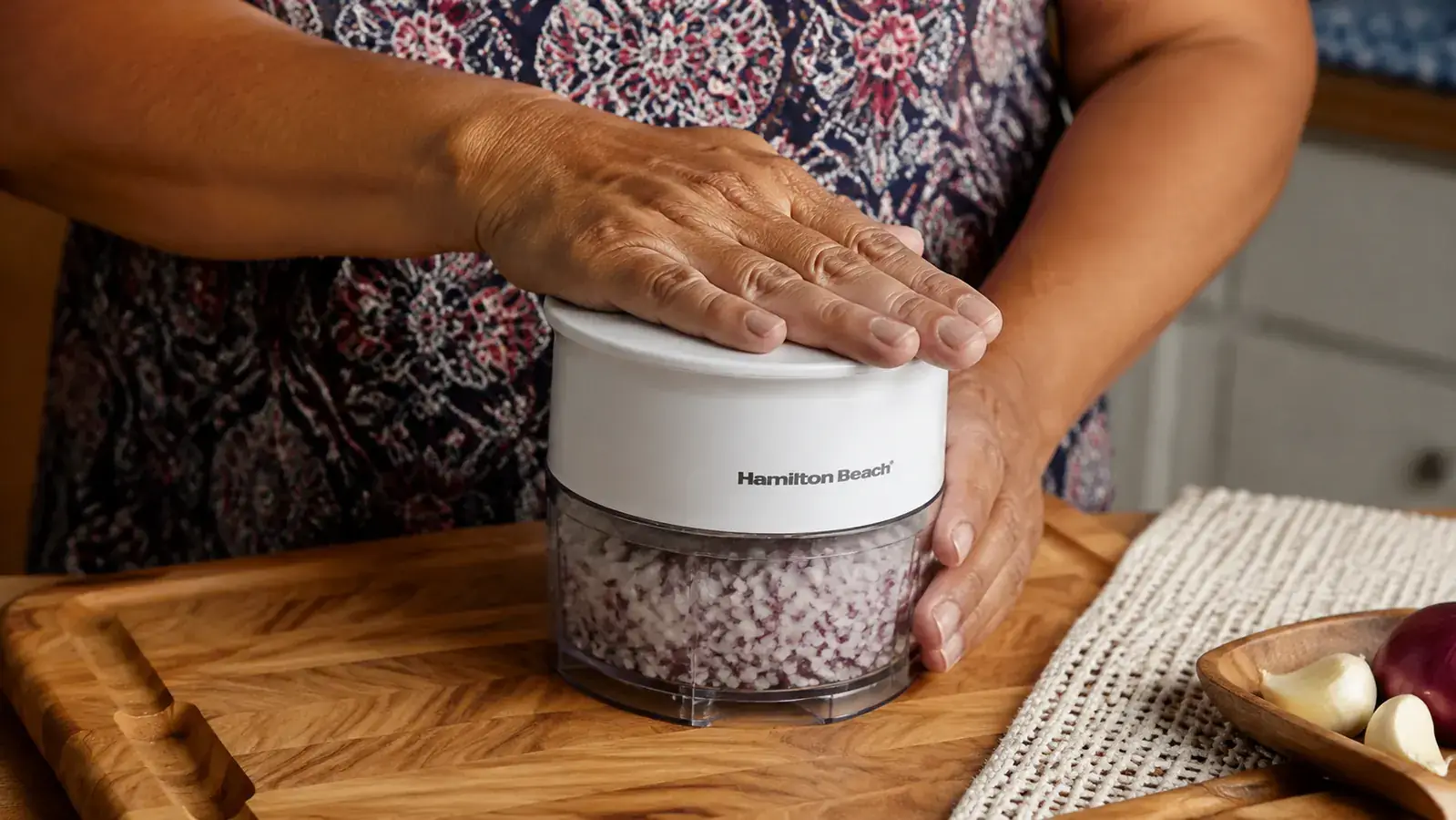
The Hamilton Beach has no on-off switch. No dial. No button. You activate the motor by pressing the lid straight down. When you lift your hand, the motor stops. That is the entire control system. I will tell you what is genuinely good about this and what takes a few uses to get used to.
What is good: you are never guessing which button does what. There is only one thing to do. Press. This is especially helpful when your hands are wet or you are mid-prep and not looking directly at the machine. The press-to-run design also means the chopper physically cannot run on its own. You have to be actively holding it down. For households where someone elderly or unfamiliar might pick up a kitchen tool, that is a real safety benefit, not a marketing bullet point.
What takes adjustment: there is no separate pulse button versus a continuous run mode. Everything is manual pulse. If you want a fine chop, you hold the lid down a bit longer. If you want a rough chop, shorter. You learn the timing quickly, but the first time you use it you may over-process something because you held too long. Garlic is the most common example. Four seconds on garlic gives you minced. Seven or eight seconds gives you paste. Both can be useful, but you want to know which one you are aiming for. One or two test runs and you will have the feel for it.
One more thing worth knowing: the lid has to be seated fully for the machine to run. This is a safety interlock, and it is a good one. But occasionally, if you seat the lid slightly off-center, nothing happens when you press down. You lift, reposition the lid slightly, press again, and it works. This happens rarely once you get the feel of the alignment, but the first week or two you may wonder if something is wrong with the machine. It is not. The lid just needs to sit true.
What the 3-Cup Size Really Means for Your Cooking
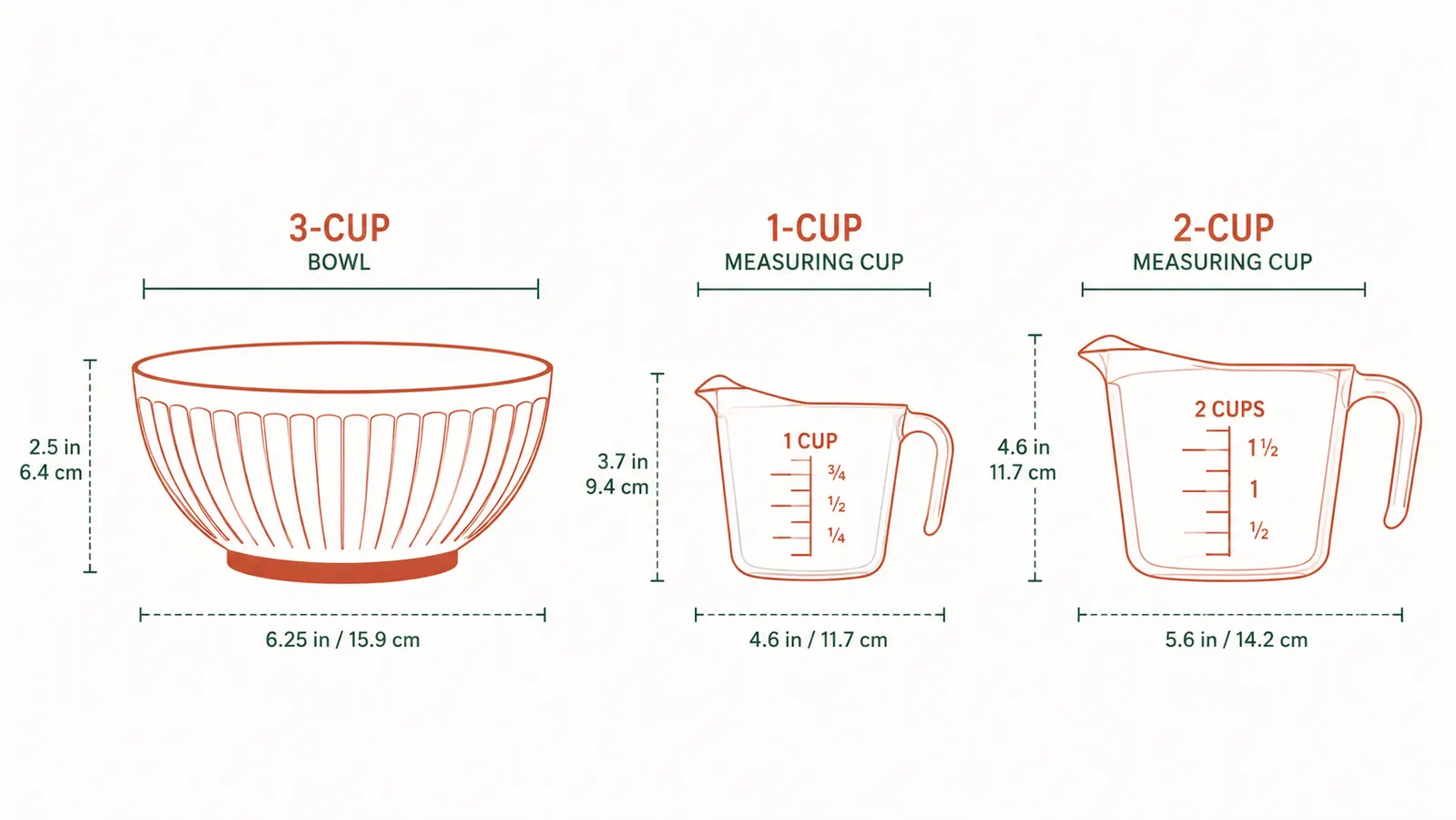
Three cups is not a lot of space when you are looking at an empty bowl. When you fill it with food, it makes more sense. One medium onion, quartered, fits comfortably. Two or three garlic cloves plus a knob of peeled ginger fit without issue. A generous handful of fresh herbs, cilantro, basil, parsley, fills the bowl nicely with room to chop without everything packing in too tightly.
The practical limit is about half a pound of soft vegetable at a time. If you cook for one person most nights, you will almost never hit that ceiling. If you cook for two, you will occasionally need to run two batches, which takes maybe an extra two minutes. If you cook for four or more people regularly, the 3-cup bowl becomes genuinely inconvenient. You would be doing three or four batches of onion chopping before a single stew, and at that point a larger tool makes more sense.
The size is also part of why the cleanup is so fast. Three pieces come apart in about ten seconds. Rinse the bowl and blade under the tap, run the lid under water, done. No reaching into crevices. No blade housing to scrub around. If you have ever owned a full-size food processor and then stopped using it because dismantling it felt like a project, you understand immediately why this size matters. Small enough to fit under your kitchen faucet without angling anything. That is not an accident. It is the actual design advantage.
The cleanup is the selling point nobody writes about. Three pieces, ten seconds to rinse, nothing to reach into or scrub around. That is why I reach for this instead of leaving a knife on the board.
The Carrot Problem (And Why It Matters If You Prep Certain Things)
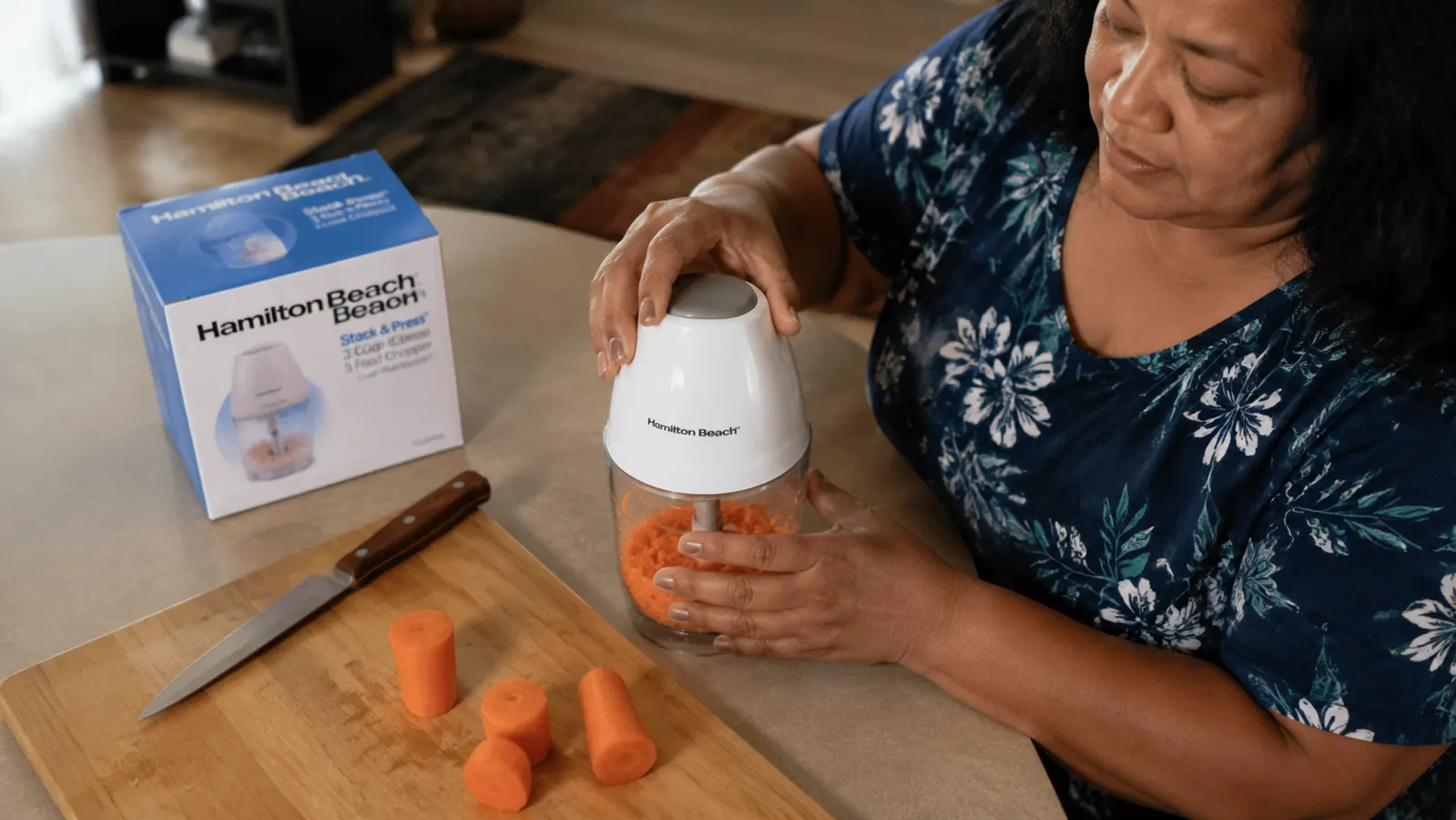
Raw carrots are where honest reviews earn their keep. If you read the listing copy quickly, you might assume this chopper handles vegetables generally. It handles soft-to-medium density vegetables well. Onions, garlic, bell peppers, fresh herbs, zucchini, soft cooked vegetables, ginger, shallots. Those all behave exactly as you hope.
Raw carrots are a different story. Cut a carrot into rough chunks and process them, and you get uneven results. Some pieces chop fine, some bounce around without catching the blade cleanly. The motor handles the load but the cut is not consistent. You can compensate by cutting the carrot into smaller, thinner pieces before you add it to the bowl, which helps significantly. But it adds a knife step that partly defeats the purpose of using the chopper in the first place.
The same applies to any hard root vegetable. Raw beet, turnip, dense squash before it is cooked: these are not great fits. This is not a flaw so much as an honest description of what 350 watts at this bowl size can do. If your weeknight prep is mostly aromatics and soft vegetables, you will never run into this. If you batch-prep carrots or beets for salads regularly, you will find it frustrating and should look at a higher-wattage machine.

The Blade: Sharp Enough to Work, Small Enough to Lose
The stainless steel blade does its job. It chops cleanly on soft foods and does not dull noticeably with normal use. But it is small, and it is sharp, and if you tip the bowl to rinse it in a hurry, the blade can slide out unexpectedly. I wash it by holding the bowl upright and rinsing water down through the bowl rather than tipping it. Slow and deliberate, not rushed. Once you build that habit it is not an issue, but the first few times it catches you off guard.
The blade also picks up garlic and herb oils and can carry a faint smell if you use it for onions and then do not rinse promptly. A quick rinse right after use solves this completely. Let it sit for an hour and you may need a drop of dish soap to clear the smell. Not a real problem, just worth knowing so you are not puzzled the first time it happens.
What the Price Actually Signals
The Hamilton Beach chopper costs less than most kitchen tools that get a drawer or a cabinet shelf. At the current price, it is roughly the cost of a decent lunch out, sometimes less. That price point raises a reasonable question: is something being compromised to get there?
The answer is yes, but in ways that may not affect you. The plastic body is not premium. It does the job but you can feel the difference between this and a tool that costs three times as much. The motor is not designed for heavy repeated use on hard foods. The base does not have aggressive non-slip feet, so on a wet counter it can slide a little. None of these are reasons to avoid it if you cook for one or two and mostly chop soft vegetables. They are reasons to avoid it if you want a machine that can handle anything you throw at it indefinitely.
What you are getting is a tool that does the most common small-kitchen chopping tasks reliably, cleans up faster than anything else you own, and takes up almost no counter space. For that specific set of needs, the price is not a warning sign. It is just accurate pricing for what the product actually is. A focused tool that does a few things very well, at a cost that makes the decision easy.
What I Liked
- Press-lid design is safe and simple with no buttons to figure out
- Three pieces only, all rinse clean in under a minute
- Very compact, stays permanently on a small counter without crowding
- Excellent results on onions, garlic, herbs, shallots, and soft vegetables
- Motor has stayed consistent and odor-free with regular use
- Low price makes it an easy, low-risk addition
Where It Falls Short
- Noticeably loud for its size when running
- Lid alignment takes a few uses to get right every time
- Struggles with raw carrots and other hard root vegetables
- Base slides slightly on wet counters without a mat underneath
- Small blade can slip out if bowl is tipped carelessly while rinsing
Who This Is For
The Hamilton Beach 3-Cup chopper is the right fit if you cook for one or two people, your nightly prep involves onions, garlic, herbs, and similar aromatics, and you want a tool that does not add cleanup burden at the end of the day. It is especially well-suited to anyone who finds knife work tiring or uncomfortable. The press-to-run design keeps your palm flat and relaxed rather than gripping or squeezing. The lightweight body means you can move it one-handed without thinking about it. And the three-piece construction means you are never avoiding using it because you dread putting it away afterward.
If you want to see how this chopper stacks up against the Cuisinart Mini-Prep, I put a direct comparison together here: Hamilton Beach Food Chopper vs Cuisinart Mini Prep: A Real-World Comparison. The short version is that each one has a clear advantage depending on which vegetables you prep most and whether you prioritize price or motor power.
Who Should Skip It
If you regularly prep for more than two people, the 3-cup bowl will feel like a bottleneck and you will end up doing multiple batches that cancel out the time savings. If hard root vegetables, raw carrot, beet, turnip, are a regular part of your prep, this chopper will frustrate you. If you want a machine that can also handle nuts, dry spices, or making pesto in quantity, you need something with more power and a larger bowl. And if silence is important because of early hours or thin apartment walls, the noise level is worth factoring in.
For everyone else, the honest verdict is simple. This is a well-designed small tool that does a specific job without asking for much in return. The 36,000 reviews are not wrong. The caveats above are real, but for the most common small-kitchen prep situations they never come up. If you cook for yourself or a person or two, mostly use aromatics and soft vegetables, and want less time at the cutting board, this will deliver on that. The things nobody tells you are manageable once you know them. And now you do.
Now that you know the real trade-offs, here is where to check the current price.
The Hamilton Beach 3-Cup Electric Food Chopper is rated 4.6 stars by more than 36,000 buyers. It is simple to operate, fast to clean, and takes up about as much counter space as a large coffee mug. If it fits the way you cook, it is worth every cent at the current price.
Amazon Check Today's Price on Amazon →