
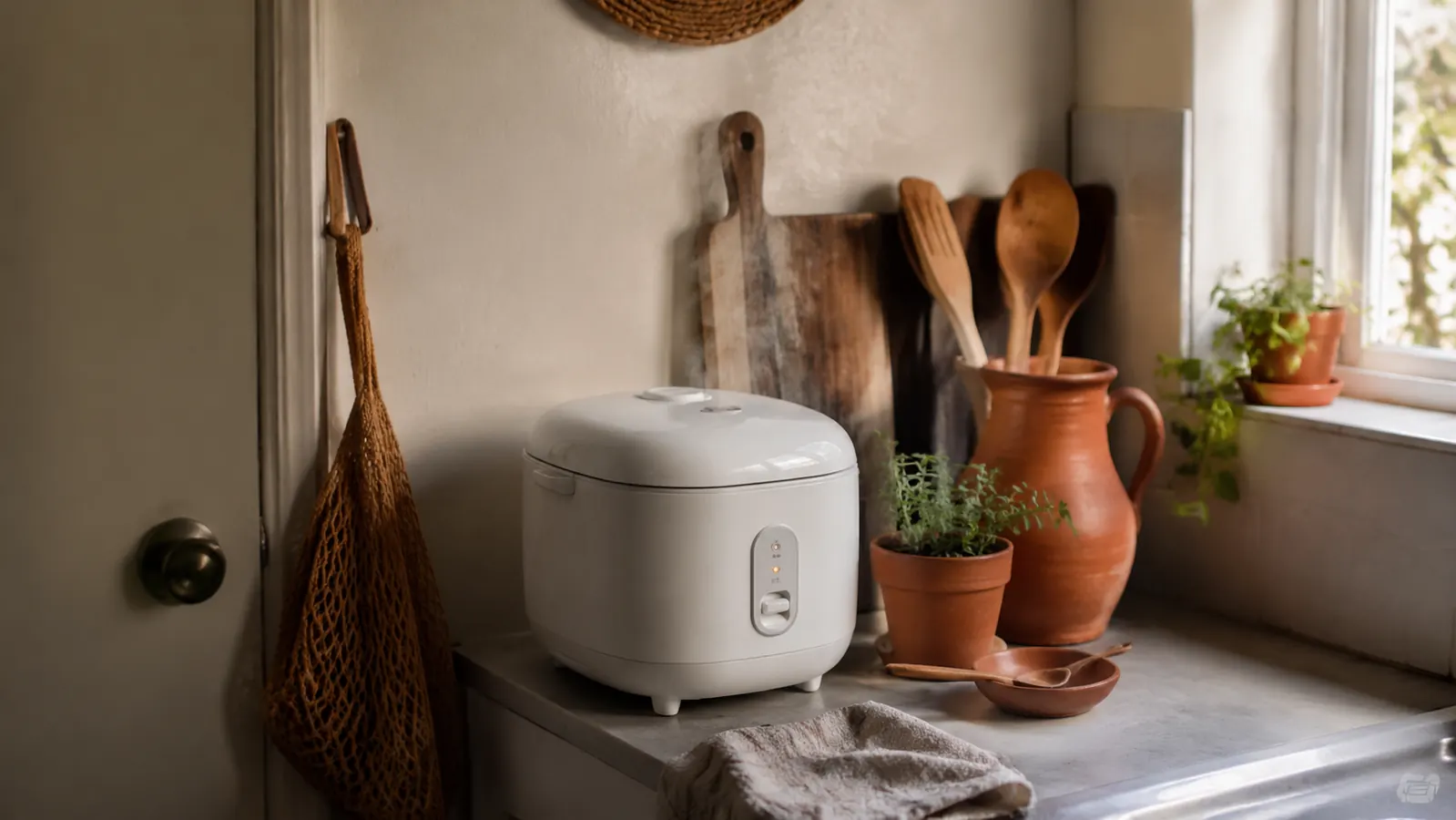
There are a lot of reviews of the AROMA 3-Cup Rice Cooker (ASIN: B00N9N6GOY) that tell you it is simple and inexpensive and works well. That part is all true. What they leave out is the small print: the steam vent that will surprise you the first morning you stand next to it, the capacity numbers that are listed in a way that confuses almost everyone, and the real ceiling on how long the keep-warm function holds before the rice starts to dry at the edges. I learned all of this by cooking with this machine, and I think you should know it before you order.
I am not trying to talk you out of this cooker. For the price and the purpose, I think it is one of the most sensible things you can buy for a small household. I just want to give you the version of this review that I wish I had found first, the one that prepares you for what is actually in the box.
The Quick Verdict
Reliable, genuinely simple, and well-suited to one or two people who want hands-free rice without spending much. The quirks are real but manageable once you know them. Go in with the right expectations and this cooker will not disappoint you.
Amazon Check Today's Price →Rice is the one thing you should never have to watch anymore.
If you cook rice for one or two people and you want something that handles it while you handle everything else, the Aroma 3-Cup is worth checking out at today's price. Budget-friendly shipped to your door most days. Simple to use from the first morning.
Amazon Check Today's Price on Amazon →What '3-Cup' Actually Means (Most People Read This Wrong)
The name says 3-Cup and the listing says 3-Cup Uncooked / 6-Cup Cooked. Here is the confusion: the cup measurement on this machine is a rice cooker cup, not a standard US measuring cup. A rice cooker cup is 180ml. A standard US measuring cup is 240ml. So when the machine says 3-cup capacity, it means roughly 2.25 standard cups of dry rice. That produces about 4 to 5 standard cups of cooked rice, not 6.
In practical terms: one rice cooker cup of dry jasmine rice is the right amount for two people at a main meal with a small amount left over. Two rice cooker cups feeds two hungry adults. Three rice cooker cups is the maximum and it will fill the inner pot close to the brim, which means you need to be careful about not overfilling past the water line or the lid may drip from pressure. If you are cooking for more than two people regularly, you will be running the machine twice, and that negates the convenience almost entirely. Go in knowing that.

The Steam Vent: What Happens the First Time You Stand Next to It
The lid on the Aroma 3-Cup has a small steam vent hole in the top. When the cooker is near the end of the cooking cycle, it releases a burst of steam through that vent. This is normal and it is how the machine knows it is close to done. What nobody warns you about is that the burst can be surprisingly sharp, especially in a quiet kitchen in the morning when you are not expecting it.
The first time it happened to me I was standing right next to the counter and it startled me. It is not a danger if your hand is not directly over the vent, but it is worth knowing so you can position the cooker with the vent facing away from where people pass or reach. In a small kitchen, counter real estate is tight and you might be tempted to tuck the cooker into a corner or under a cabinet. Leave at least a foot of clearance above the vent so the steam can escape cleanly without hitting a shelf or cabinet door.
Also: the lid will have condensation water on the underside when you lift it. Lift it away from you and tilt it slightly so the drops fall back into the pot rather than onto the counter or onto your hand. A small habit but it saves a small mess every time.
The First Use Smell and What to Do About It
When you first run this cooker, you may notice a faint plastic or manufacturing smell during the cook cycle. It is not strong and it fades, but if you are sensitive to it or if you are cooking for someone with a delicate stomach, it is worth knowing. The standard fix is to run the cooker once with just water before you cook any rice in it. Fill it to the two-cup water line, run a full cook cycle, discard the water, let it cool, and then start your real cooking. The smell is gone by the second or third actual use. I would rather tell you this now than have you wonder why your first batch of rice smells slightly off.
Run it once with plain water before your first batch of rice. The listing does not mention this. I wish someone had told me before I opened the box.
How Long Keep-Warm Actually Holds Up
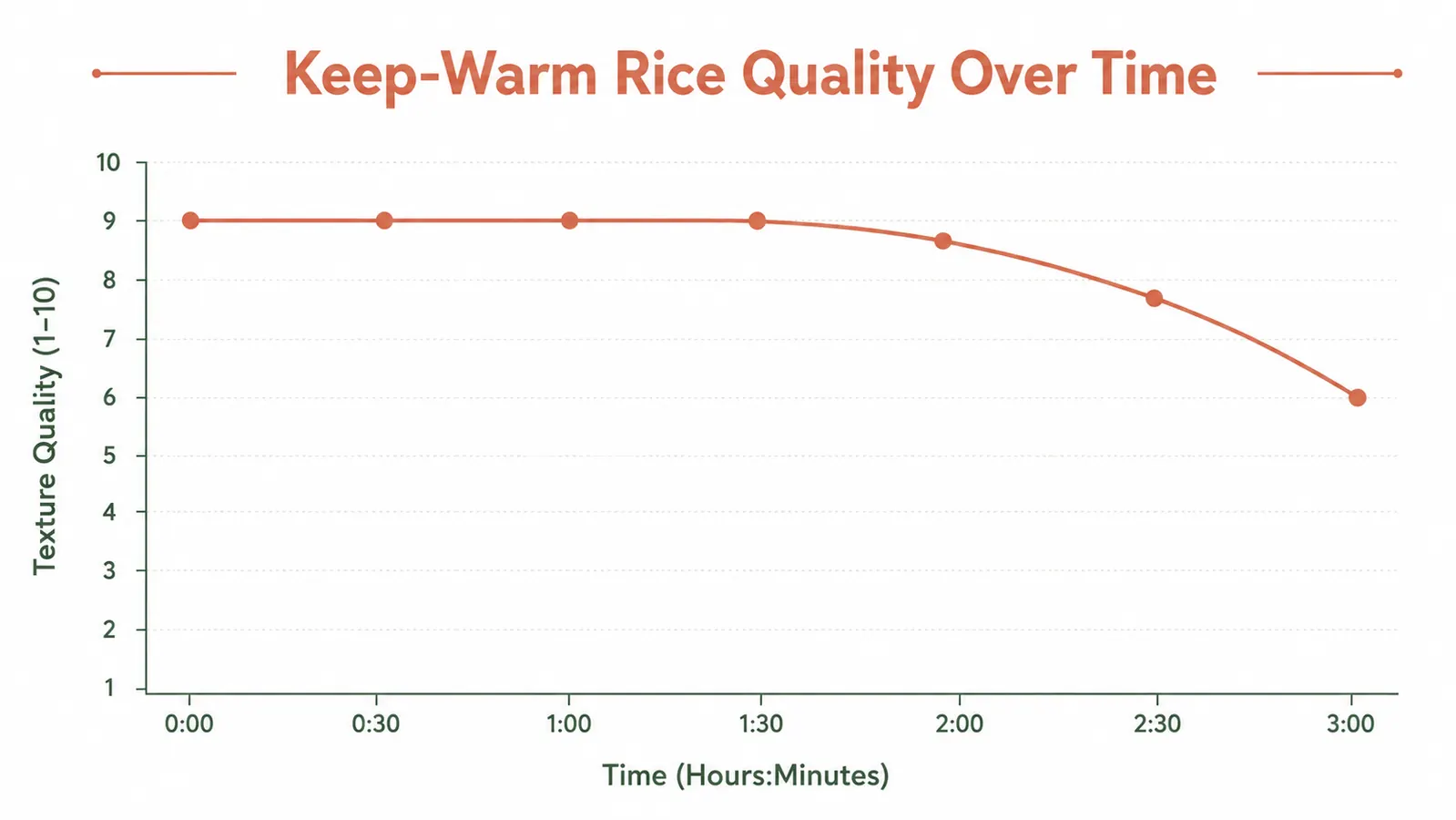
The keep-warm function is one of the genuine strengths of this cooker. It is also one of the areas where people sometimes get frustrated because they expect it to do something it was not built to do. Here is the honest picture of what to expect.
From the moment the cooker switches to warm mode, the rice holds texture well for about 90 minutes. During that window it stays moist and fluffy and you would not know it had been sitting. Between 90 minutes and two hours the rice is still very good, but the top layer may start to pull in slightly at the edges of the pot. After two hours the rice is still edible but you will notice the texture is drier and the bottom may be developing a crust. That bottom crust, called socarrat in some traditions, is not unpleasant, but if you are expecting hotel-buffet-fresh rice three hours after cooking, you will be disappointed.
The practical takeaway: if you are leaving rice on warm so it is ready when you come home or when the person you care for is ready to eat, plan for a window of about 90 minutes and you will be satisfied. If you need longer than that, stir the rice when you take the lid off, or add a tablespoon of water and let it sit on warm for another ten minutes before serving. That will refresh the texture meaningfully.
The Inner Pot Sits a Little Loose: This Is Normal
When you set the inner pot into the housing, it does not click or lock in. It sits in place, and if you nudge the cooker on the counter the pot will shift slightly inside. Several people in the Amazon reviews mention this as a defect, but it is not. The pot is designed to sit freely so it can make full contact with the heating element at the bottom. If it were locked in place it might trap the heating element against one side unevenly.
What this does mean practically is that you should make sure the pot is properly seated before you close the lid and start a cycle. Take a quick look to confirm it is sitting flat, not tilted. If it is tilted, the water level will be off and the rice on the low side of the pot will cook faster than the rest. I check this every time as a habit now. It takes two seconds and prevents an uneven batch.

What This Cooker Does That the Listing Does Not Mention: Congee
One of the quiet discoveries I made with this machine is that it makes excellent congee, the soft rice porridge that is a staple in a lot of Asian households. Congee is just rice cooked with significantly more water than usual, around a 1:8 ratio of rice to water, until the grains break down into a thick, creamy porridge. Most rice cookers with a single cook setting will produce congee if you simply use more water and let the machine run its full cycle and then keep-warm cycle.
For the Aroma 3-Cup: use half a rice cooker cup of uncooked white rice with four cups of water (using a standard measuring cup for the water is fine here). Let it run through the full cook cycle and then let it sit on warm for 20 minutes with the lid closed. Stir when you open it. The result is smooth, gentle porridge that is easy on the stomach, simple to eat, and exactly the kind of food that is comforting for someone who is older or not feeling well. I use this method at least once a week and the cooker handles it without complaint.
You will want to clean the pot promptly after congee because the starchy water can sit in the crevice where the pot meets the rim and dry into a thin crust if you leave it overnight. A quick rinse right after serving takes care of it completely.
Water Line Markings: Trust Them, Then Adjust Once
The inner pot has water level lines etched on the inside wall, labeled by number of cups. For most white rice, following those lines gets you to a good result on the first try. That said, every grain of rice is slightly different, jasmine absorbs a bit more water than long-grain white, and altitude affects cooking. If your first batch is slightly wet, reduce the water by a small amount (about a tablespoon) next time. If it is slightly dry, add a similar amount. Once you find your setting for your preferred rice, write it down or just remember it, because you will use that same amount every time and the results will be consistent.
The lines are legible but not deeply etched. In dim kitchen light they can be a little hard to read. If your kitchen lighting is not great, a flashlight on your phone for two seconds solves it. Alternatively, measure your water in a separate small measuring cup and pour it in, which removes the need to read the markings at all. I do this for the first cup of rice each morning when I am still half-awake and would rather not squint.
What I Liked
- Single cook setting is genuinely foolproof for white rice and congee once you know your water ratio
- Keep-warm holds texture well for up to 90 minutes, practical for caregiving schedules
- Lightweight and compact enough for the tightest kitchen counters
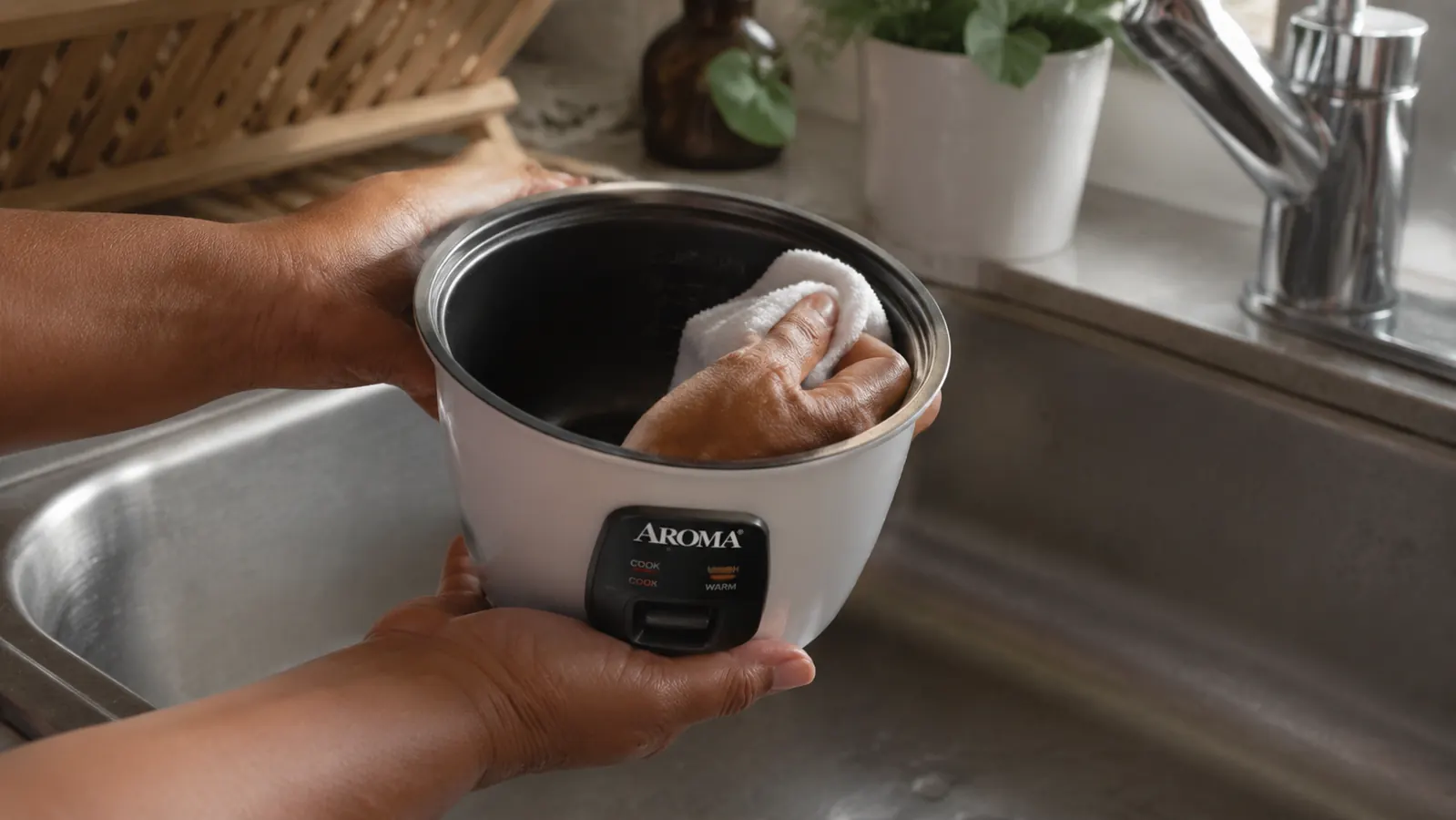
- Inner pot removes cleanly and rinses in under a minute after most cooks
- No plastic or electronic controls to break, the lever mechanism is simple and durable
- Works as a congee maker with no extra equipment or technique
Where It Falls Short
- Steam vent releases a sharp burst near end of cycle, position away from cabinet undersides and reaching paths
- Inner pot sits loose in housing, check it is seated flat before every cook or you get uneven results
- Keep-warm quality drops noticeably after two hours, not suited to leaving rice all day
- Capacity labeling uses rice cooker cups (180ml), not standard US cups, which confuses portion estimates at first
- Faint manufacturing smell on first one or two uses, run a plain-water cycle before cooking for someone with a sensitive stomach
Who This Cooker Is For
This is the right machine for a person cooking one or two servings of white rice most days, who wants something that works without instruction, takes up minimal counter space, and can be left running safely while they attend to something else in the house. It is especially well-suited to anyone preparing food for a person who is older, has limited energy, or needs meals to be ready at irregular times. The keep-warm window is long enough to cover a typical morning or afternoon window. The controls are simple enough that you can hand this to almost anyone and they will figure it out without a manual. If you want to read about why a cooker like this fits small-household cooking so well, our piece on 10 reasons a small rice cooker is perfect when cooking for one or two covers it in more depth.
Who Should Skip It
If your household cooks multiple grain types and wants dedicated programs for each, this single-setting machine will feel limiting. If you regularly need rice on warm for more than two hours before serving, you will want a model with a longer or smarter keep-warm system. If you are cooking for three or more people at a time, the 3-cup uncooked capacity becomes a bottleneck. And if you are in a kitchen where there is no clearance above the counter for a steam vent, you will need to find a different placement solution or choose a different cooker. The Aroma 3-Cup is excellent at what it does and not especially suited to what it was not designed for. Knowing that distinction before you buy is the whole point of this review. You can also find a detailed comparison with the premium end of the market in our Aroma vs Zojirushi comparison if you are weighing whether to spend more.
Now you know what to expect. Is it right for your kitchen?
The quirks are real and manageable. The price is low enough that it earns back its cost within a week of daily use compared to restaurant or packaged rice. If cooking for one or two people in a small kitchen with simple controls and easy cleanup sounds like your situation, check today's price on Amazon and decide from there.
Amazon Check Today's Price on Amazon →